AI
We integrate AI into real products and processes: agents, conversational systems and intelligent information processing.
MODELS / AGENTS / INTEGRATIONDigital systems designed around people.
01DHR / We build the connection between people and the digital world.
We develop software products, AI-powered systems, automation and digital experiences built for real-world problems.
From idea to working system — digital solutions built for real-world problems.
We integrate AI into real products and processes: agents, conversational systems and intelligent information processing.
MODELS / AGENTS / INTEGRATIONWe develop web applications, platforms and custom systems designed for clarity, performance and long-term evolution.
WEB / PLATFORMS / SYSTEMSWe turn an idea into a coherent digital product, from structure and user experience to implementation.
STRATEGY / UX / PRODUCTWe connect tools and automate repetitive steps to create clearer and more efficient workflows.
WORKFLOWS / INTEGRATIONS / SCALINGWe analyse the context, define the technical direction and turn objectives into a realistic implementation plan.
ANALYSIS / ARCHITECTURE / IMPLEMENTATIONWe structure and analyse data to create useful indicators, clear reporting and better-informed decisions.
DATA / INDICATORS / DECISIONSWe build proprietary products and prototypes that turn complex ideas into usable systems.
We have outlined a few directions we can develop together.
From configurable platforms and interfaces designed for specific processes to digital experiences and systems connecting AI, data, research and industry. Each concept can be customised, extended or integrated with other systems and technologies to meet the organisation’s real needs.
Modules connected in a shared platform, with a consistent visual structure across the organisation.
All solutions can be built in the format you need: an integrated platform, a standalone application, a web portal or a mobile interface. Design, structure, modules and workflows adapt to your organisation.
Outline your project by answering a few questions about goals, features and existing systems. You can then send the configuration to Digital Human Romania to discuss a suitable solution.
We understand the context, users, data, constraints and intended outcome.
We establish the solution, architecture, priorities and success criteria.
We build a testable version to validate the idea and its essential flows early.
We develop, integrate and test the system in real usage conditions.
We improve the product based on feedback and emerging needs.
Our principle
Technology adapted to real-world context.
05.1 / ABOUT US
Digital Human Romania is built on the complementarity between engineering, applied research and technological development on one side, and education, psychology and human development on the other. Around this core, depending on the project, we bring together expertise in software, artificial intelligence, mechatronics, research, 3D design and communication.
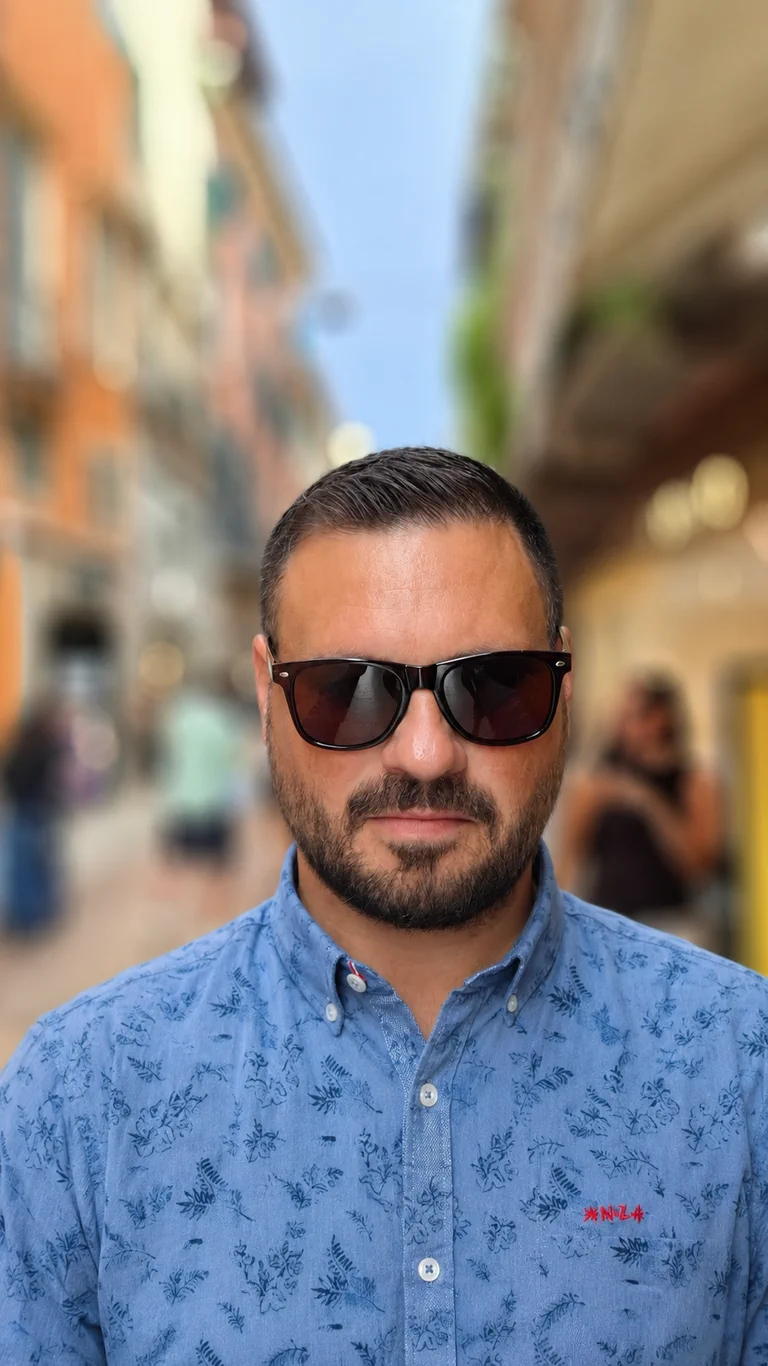
Founder · Technical Director · University Lecturer · Engineering, AI & Digital Development
Engineer, PhD in Industrial Engineering and university lecturer, with a professional path spanning applied engineering, research and technological development. His education includes international study and research experience in Denmark and Portugal, complemented by collaborations with industry and participation in national and European projects.
His expertise begins with mechatronic and industrial systems, manufacturing processes, materials, engineering design and simulation, and extends to digital manufacturing, computer vision, machine learning, artificial intelligence and IoT. His research and development work focuses in particular on how these technologies can transform industrial processes, design, maintenance and the interaction between people and systems.
His experience includes smart manufacturing projects for industrial and aeronautical applications, the development and evaluation of adaptive systems, the use of AI and image analysis in engineering processes, as well as technical roles in digitalisation projects, the development of educational infrastructures and the integration of new technologies in real-world contexts.
Immersive technologies represent an important direction. Following projects and research in virtual and augmented reality, his recent work includes introducing XR technologies – extended reality – and XR devices into the university environment to develop new forms of visualisation, simulation and interaction with information. Current research explores the use of VR/AR/XR in the design and maintenance of mechatronic systems, the evaluation of robotic motion in immersive virtual environments, and the integration of AI and IoT into monitoring and predictive maintenance.
In parallel, further directions are being developed around creating three-dimensional models from ordinary images and using artificial intelligence to interpret visual information. Another line of research explores the digital recreation of human presence – including visual representation and voice – to develop more natural forms of interaction between people and digital systems.
The digital transformation component is complemented by activities dedicated to augmented reality, the digitalisation of learning processes, the development of technological skills and preparation for the professions of the future. These directions also include the design and development of web platforms and digital applications for education, collaboration, resource management and access to interactive content, with an emphasis on coherently integrating technology into simple and accessible user experiences.
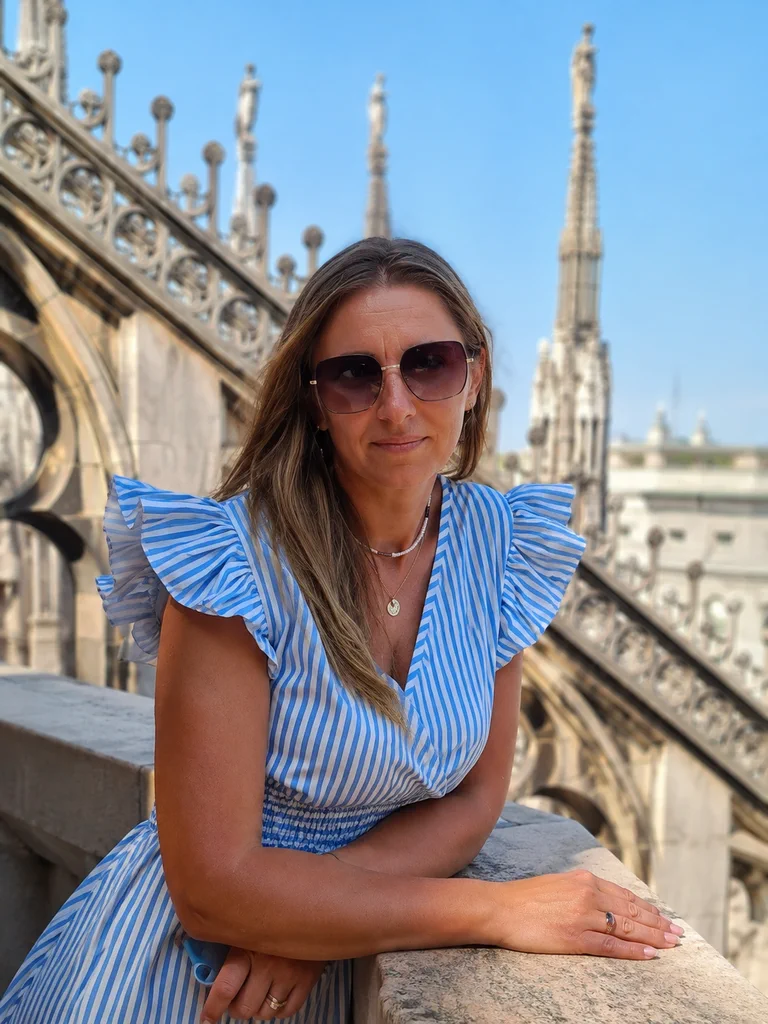
Education & Content Director · Pedagogy · Validation
Multidisciplinary training at the intersection of psychology, education, physiotherapy and human development, built through two university degree programmes and deepened through master's studies in conflict mediation and physiotherapy. Her international experience includes an Erasmus mobility in Wrocław, Poland, undertaken during her physiotherapy studies and contributing to the development of an open perspective on education, rehabilitation, communication and working in intercultural contexts.
Her professional path began in intervention and rehabilitation through collaboration in the implementation of therapeutic programmes for children with autism spectrum disorders, an experience that involved observation, adaptation of interventions and interdisciplinary collaboration. This was followed by teaching experience in a Romanian-American educational environment and, subsequently, a professional path encompassing nearly two decades of direct work with children in diverse educational settings.
This extensive experience has provided direct contact with learning and development processes, individual differences, relationship dynamics, communication and the adaptation of methods to beneficiaries' real needs. Beyond pedagogical experience itself, continuous work with different generations has strengthened her ability to observe how behaviours, interests, ways of learning and the relationship with technology change over time.
Her training in psychology provides a foundation for understanding cognitive, emotional and behavioural processes, motivation, communication and interpersonal relationships, while her training in conflict mediation complements this perspective through mechanisms of negotiation, communication and constructive management of relational situations. The physiotherapy component adds the functional and motor dimension, the relationship between movement, autonomy and development, as well as experience in working with individualised objectives and evaluating progress.
This combination enables an integrated approach to human development that is not limited to a single stage of life: cognitive and emotional processes, motor development, relationships, learning, adaptation and the interaction between individuals and the environments in which they evolve.
Her educational experience has strengthened her skills in designing and organising learning experiences, developing and adapting content, assessment, communication and the integration of interactive and creative methods. Her methodological and scientific work has addressed cognitive development and the foundations of personality, while recent research directions extend this experience towards the development of technical thinking and the analysis of technology's influence on human development and behaviour.
An important current direction is the relationship between people and technology. Her interest focuses not only on introducing digital tools, but also on how they are understood, used and integrated into real experiences: how intuitive a system is, how content is perceived, what cognitive demands it creates, how it supports learning, communication or autonomy, and to what extent technology brings genuine value to the user.
In the field of digital development, this experience is applied to the conception, structuring and validation of content for web platforms, applications and interactive experiences. Her work includes defining objectives and the user journey, progressively organising information, adapting language and levels of complexity, aligning text, image and interaction, and evaluating the experience in terms of clarity, accessibility and relevance for its intended audience.
For educational products, this validation includes an additional pedagogical dimension: coherence between objectives, content and activities, suitability of the experience for the user's level of development, and maintaining a balance between technology and authentic processes of exploration, learning, communication and creation.
Recent directions thus bring together education, psychology, human development and technology within a perspective centred on the user's real experience. Within Digital Human Romania, this approach helps transform technical solutions into products and experiences that people can understand, use and integrate naturally – through content, educational design, structuring, evaluation and validation.
05.2 / EXPERTISE NETWORK
Around the core team is a professional network built through university projects, applied research, digitalisation initiatives and educational collaboration. Depending on the objectives, we bring together expertise in software and AI, engineering and mechatronics, education, research, 3D design and communication. Collaborators are involved on a project basis according to the requirements and responsibilities of each project.
Tell us about the problem, the context and the outcome you are looking for. You do not need to have the technical solution already defined.